
The Road to Housing Act Might Actually Pass
What happens after that? State legislatures give us a preview.

Today, it looks as if the biggest national housing bill in decades will become law. President Donald Trump said he won’t sign the 21st Century Road to Housing Act, but he won’t veto it either — which means that at midnight tonight, the bill will become law. Fingers crossed.
In June, after a good amount of advocacy and lobbying, both chambers of Congress passed the bill with broad, bipartisan majorities. It was sent to the President for his signature, and the vibes were good. Both parties wanted to take action on one of America’s top issues: housing affordability.
In a more normal time, the President would have signed the bill, declared victory, and taken credit for taking on the problem. But the unexpected happened — Trump cancelled his signing ceremony so abruptly that people on their way to the White House had to turn around. Instead of signing the bill, Trump demanded that the Senate pass voter ID legislation first. Given that there weren’t enough votes for that bill, it looked like maybe that was it for the housing bill.
Until it wasn’t. Speaker of House Mike Johnson sent the Housing Act to the president anyway, which set up the ten-day waiting period that expired today. As of midnight tonight, if the president does nothing, the bill will become law. That’s a circuitous route to victory, but a victory nevertheless. As of thirty minutes ago, the New York Times is reporting that it seems Trump will allow it to become law.

Though we’re living through the most abnormal of times, what still strikes me as interesting about this legislative session is actually how normal this path has become in states around the country. The Trump veto/nonveto aspect is unexpected, but in other ways this echoes what has been going down in state legislatures across the country.
Speaking schematically, this is usually what goes down: One of the more ambitious or forward-thinking state legislators will decide that housing is a big issue — and it can be their issue to champion. So they write a bill that makes some waves. Sometimes the bill is very ambitious, like California State Senator Wiener’s original SB 827, which one source at the time called a “neutron bomb.”
Neutron bomb or not, the bill in question could do a lot of different things. It could rezone large chunks of the state, take the power away from the hands of local governments to block housing, or devotes a whole bunch of money to new construction. Sometimes it’s something small and seemingly palatable to opponents, like Accessory Dwelling Units or Yes In God’s Backyard.
Big or small, the bill kicks up a huge fight during the legislative session. Maybe it passes. Usually it doesn’t. Often it gets watered down or workshopped down to something complicated and useless. The ins and outs of the fight feel particular and dramatic.
But in the background, something bigger is happening. The rest of the legislators are watching a new constituency emerge. They’re seeing the press cover the issue and elevate the names of the bill’s authors. They’re seeing new organizations using new language about the “housing shortage.” And they’re being contacted by voters in their district saying, yes, this is actually important.
It isn’t a bill, it’s a trial balloon, and to mix my metaphors, it’s catching fire. Legislators are picking up that there is a major pro-housing constituency out there that will reward them if they make an attempt.
So in the next legislative session, we see a thousand fiery balloon flowers bloom: more pro-housing bills, usually less ambitious than the first one, get proposed. Many of them even become law. And this creates a feedback loop, because when they do, more legislators realize that being pro-housing is good policy and good politics. Eventually the leadership of the legislatures realize they want to be seen taking charge. I don’t know exactly what the right metaphor is, but it’s sort of like the sprouts that emerge after a forest fire — the sprouts of a fiery balloon flower. I don’t know. You get it.
Regardless of the metaphor, my prediction is a flurry of pro-housing bills in the next national legislative session. Both parties seem to have picked up that Housing Is So Hot Right Now, and we will see action from more than just classic YIMBY champions like Brian Schatz. And, knock on wood, we’ll have more pro-housing Congressmembers like Scott Wiener there too.
Again, we’ve seen this in many states, and states are even picking it up from one another. The Furman Center at NYU has a legislative tracker that lets you see it happening across the country. They’re been tracking every housing bill since 2015, and you can see the country getting hotter and hotter.
For example, you might look at Washington state, which had three pro-housing bills introduced in 2017 and ten in 2023. And California is up to 215 bills in this legislative session.
That all sounds good, but it also kinda sucks. The bills that get introduced in this thousand-flowers-bloom period can often be very limited in scope. This makes sense. Legislators want to claim credit, but not make enemies. And any bill that would make significant impacts on housing production will have enemies. So these bills — even when you add them all up together — are often too small to address the real scope of the housing shortage. Even the more significant ones (e.g., California’s SB 79) will have numerous carve-outs and implementation challenges.
The danger here is that when the state government passes enough of these small bills, elected officials believe that they have solved the problem. People feel that the state is doing a lot, but unfortunately, not at the right scale.
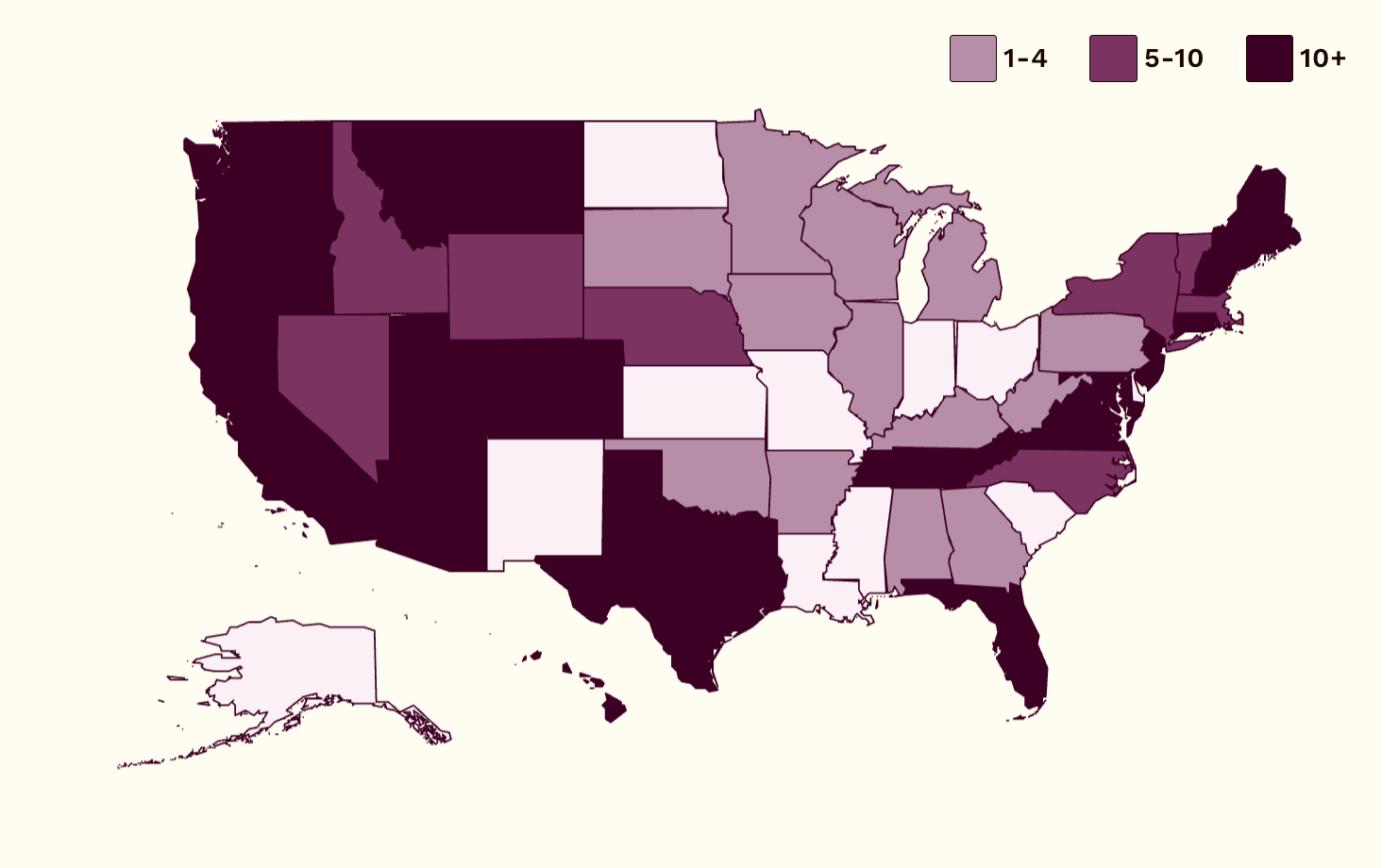
What happens next? Commentators start to comment that you’ve passed a lot of bills but shit isn’t happening. And that can be demoralizing! It’s nice when other commentators beg us all to just Take the W, but it’s reasonable to be frustrated that despite a lot of bills, the housing production charts remain sluggish.
I’m worried about how much we plateau in this phase.
In the states where we are making the most progress, “significant” bills pass every year. But to dramatically shift America’s housing production such that we are producing housing at the actual scale of the need, YIMBY can’t just be one of many competing constituencies, we have to be so powerful that we make housing outweigh most other concerns. That’s a massive lift.
But that isn’t new. In ten years, this movement has gone from a handful of activists to a genuine nationwide movement. All we need to do is at least triple that in the next ten years. That is, in fact, doable.
Bringing it back to the 21st Century Road to Housing Act, what does that mean for our work at the national level? This bill is a great first step, and next year there will be many more steps to take.