
Fighting Over the Development of a Single Grocery Store in San Francisco Is Exhausting, and Totally Worth It
The trench warfare strategy of Housing Activism

San Francisco just passed the largest rezoning in the city's history (so far), but everybody spent their winter breaks talking about a single proposal — the plans to redevelop the Safeway in the ritzy Marina district. It’s predictably preposterous that the district supervisor is freaking out over a single proposal instead of how fast our rents are increasing, but you work with the city you have, not the one you want to have.
Housing proposals always have their opponents. NIMBYs gotta NIMBY, because it “looks like Dubai.” Every politician in San Francisco got put in the hot seat.This Safeway redevelopment proposal might as well be an episode of “The Hills,” because not only are our most rich and well-off clutching their pearls in horror, but the rest of us cannot look away.
This proposal is many things, but in particular it is a gorgeous example of why we continue to push YIMBY Action chapters to engage in advocacy for individual housing proposals, even as they work on legislative and electoral politics.
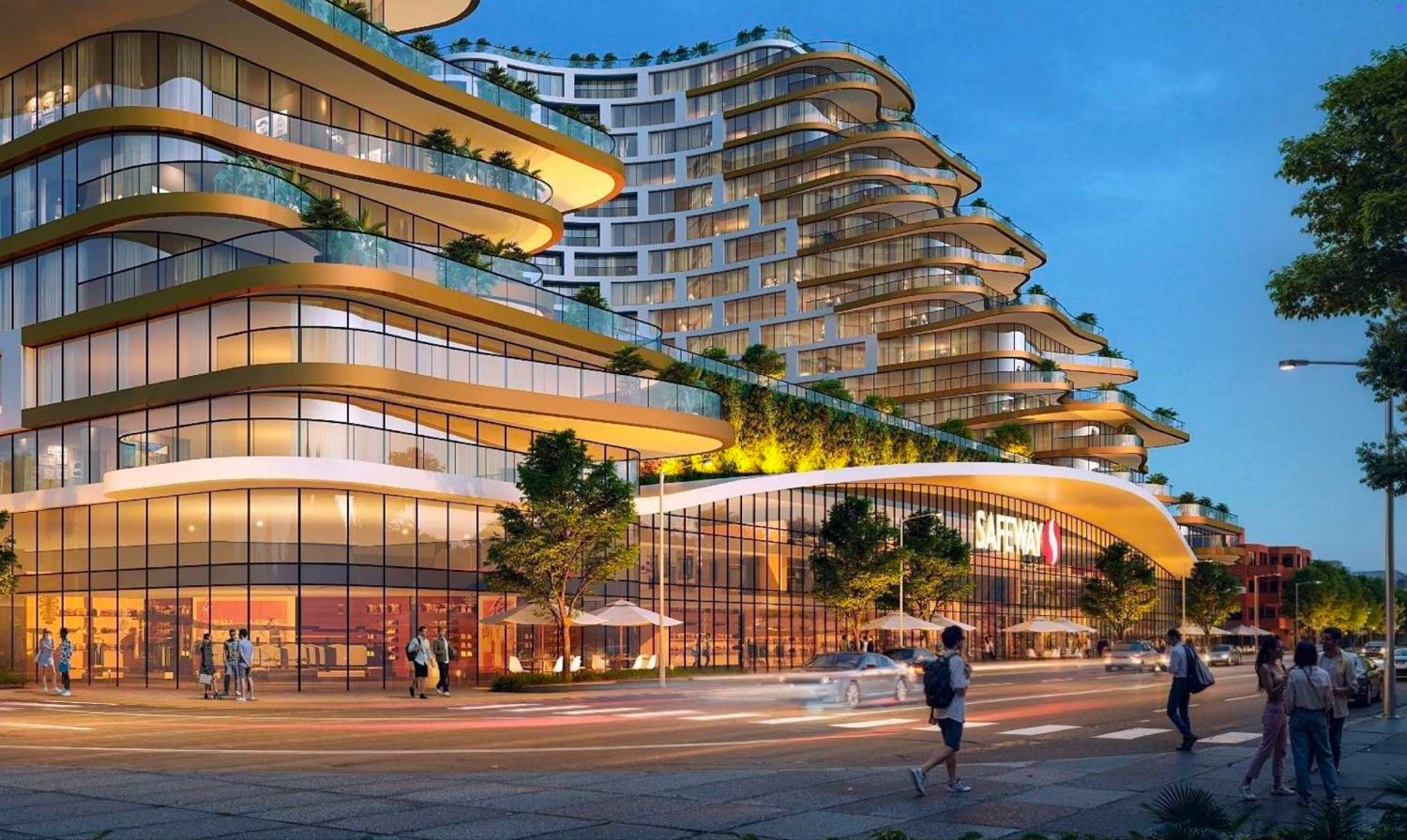
Smart people often say that project-by-project activism is a “waste of time” and a “distraction” for YIMBYs. They’ll say it’s “polarizing” or worry that we’re “wasting political capital” or argue that we need to be working at a “higher level”. Right now I have no less than three men in my inbox telling me YIMBYs shouldn’t be so loud in our support of this project!
So, why should YIMBY activists be engaging in project-by-project activism? Why should we support the splashiest, most controversial proposals? Why make time for all this nonsense?
Earn press coverage
Reporters love a tangible story. It’s hard to get people to report on statistics or themes or policy generally. But they will be covering proposals in your area whether you’re quoted in those articles or not. The choice here isn’t “should we get press to cover this or not,” the question is “will there be a pro-housing voice in this article or will the frame be community vs developer.”
Housing proposals are a tangible opening for activists to draw the conversation from aesthetics to one about the actual needs of the community. If you’re not in the mix, talking about the need for this or that housing in particular, the articles will universally be “rich developer tries to build condos and the good people of the world are fighting back!” When you can counter with “local renter struggling to stay in the community says their neighbors should open their hearts to new neighbors,” the public narrative shifts dramatically.
In addition to press coverage, for every controversial housing proposal in your backyard, there is an opportunity for you to write a compelling opinion piece in your local newspapers. Rarely will your local paper want to publish your general pro-housing screed, but the controversial nature of a specific housing proposal means you are likely to get published. Local papers love to run these kinds of pieces because both NIMBYs and YIMBYs will click, click, click.
Demonstrate power to elected officials
The same local elected officials who write state and local policy are putting their finger in the air with every housing proposal, tracking how popular housing is in their district.
One of the core ways that YIMBYism has grown is by showing to elected officials that there is actually a large constituency in favor of new construction. For decades, the common wisdom was that there wasn’t — because those people weren’t showing up to public meetings.
Most politics is “thesis, antithesis, synthesis,” where the politician likes to come in on a white horse named Reasonableness to graciously find the middle ground. So if no one is staking out “thesis,” guess where that “middle ground” starts to move toward? (Hint: Not our side.)
Get better at doing policy and driving legislative implementation
Housing activism is a long-term iterative process of growing a visible voting bloc in a district and building power. The more proposals we are active around, the more we learn and grow.
Project advocacy gives you a front-row seat to how housing proposals get ground down. What exactly caused a developer to drop that fifth floor and 20 units? What mechanism gave the city council the ability to tap the breaks? What law is the planning department creatively interpreting and could use a letter from a state agency clarifying their legal obligations? What city officials have hidden power to shut down housing proposals? When you have influence with elected officials, what departments need new leadership?
And understanding where housing laws are breaking down is critical for closing loopholes. At YIMBY Action, all of our chapters housing proposal advocacy is collected into a central database. That database allows us to put out reports like “California Housing Laws: Lessons from the Field” charting the breakdown of 5 key bills. Check out our Implementation Guide for more advice on making laws matter.
Grow your membership
Local headlines draw in new YIMBYs. I can’t count the number of people who came into pro-housing politics because of previous fights like the supposed Wall on the Waterfront or the equivalent in their city.
Being active and engaged in your community is inspiring! People can see that there are real people they could join with. The loneliness epidemic is fought by inspiring others to join your club!
Now to be clear, there can be a drawback too. For staff-driven organizations, it can be exhausting and potentially not a high ROI to engage in project-by-project activism. But for volunteer-driven organizations that use activism to gain narrative power and grow their list, housing proposal advocacy is the meat and potatoes that will keep your chapters growing.
The point is this: You should be in project-by-project advocacy. And meeting hot local singles near you at the Dateway.
EDIT:
Comment from yeshuap is spot on:
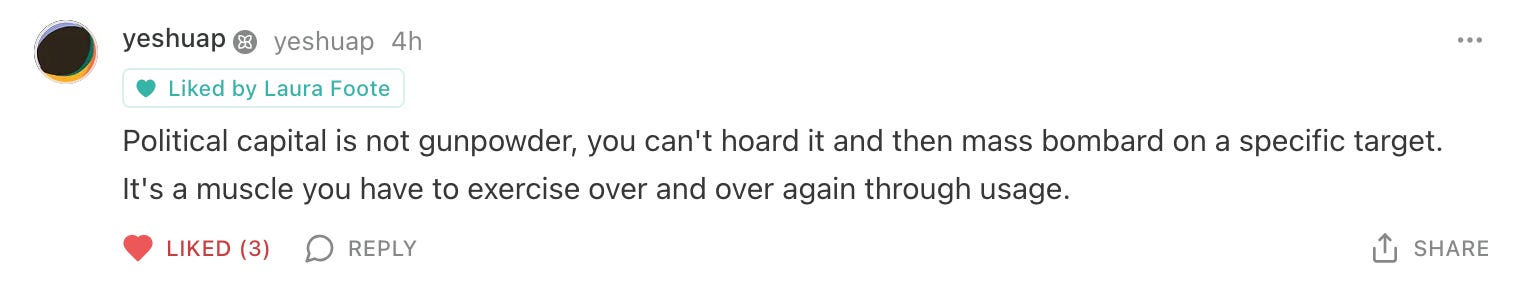
Political capital is not gunpowder, you can't hoard it and then mass bombard on a specific target. It's a muscle you have to exercise over and over again through usage.
Such an important point Laura. My own origins as a local YIMBY organizer happened because of a splashy project in my hometown that other YIMBYs supported loudly. Abstract policy campaigns can be good for mobilizing true believers, but they’re hard to build membership around. Normal human beings rarely connect emotionally to housing issues unless they see a real project (and the ridiculous opposition it generates), and people will only dedicate their free time to an issue if they feel emotional about it